In its broadest meaning, DevOps is a philosophy that promotes better communication and collaboration between these teams — and others — in an organization. In its most narrow interpretation, DevOps describes the adoption of iterative software development, automation, and programmable infrastructure deployment and maintenance. The term also covers culture changes, such as building trust and cohesion between developers and systems administrators and aligning technological projects to business requirements. DevOps can change the software delivery chain, services, job roles, IT tools and best practices.
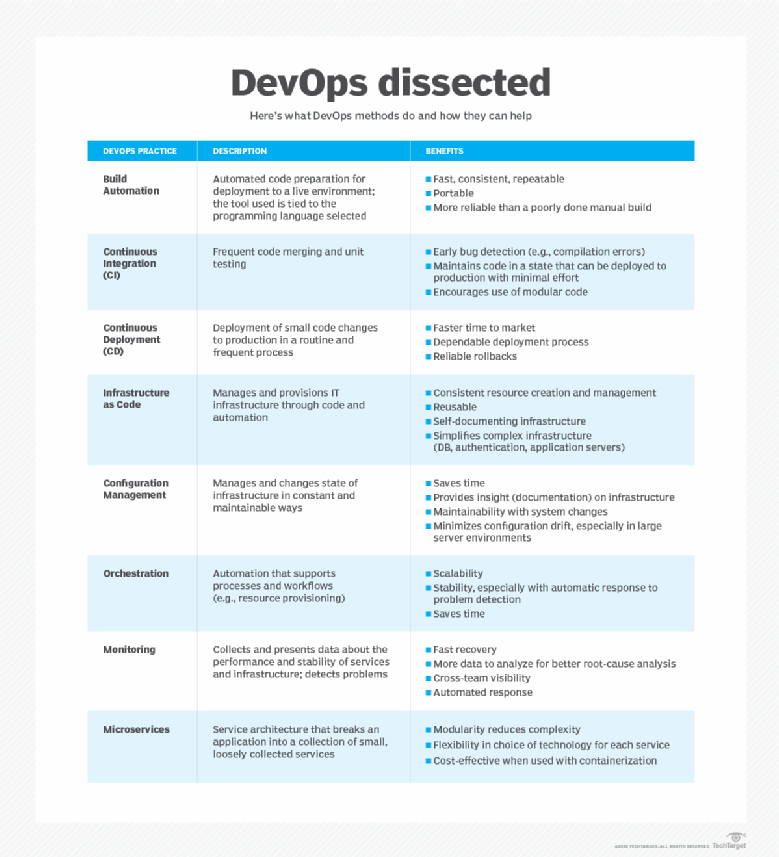
While DevOps is not a technology, DevOps environments generally apply common methodologies. These include the following:
- continuous integration and continuous delivery or continuous deployment (CI/CD) tools, with an emphasis on task automation;
- systems and tools that support DevOps adoption, including real-time monitoring, incident management, configuration management and collaboration platforms; and
- cloud computing, microservices and containers implemented concurrently with DevOps methodologies.
A DevOps approach is one of many techniques IT staff use to execute IT projects that meet business needs. DevOps can coexist with Agile software development; IT service management frameworks, such as ITIL; project management directives, such as Lean and Six Sigma; and other strategies.
Some IT professionals believe that the simple combination of Dev and Ops is not enough, and the term DevOps should explicitly include business (BizDevOps), security (DevSecOps) or other areas.
How does DevOps work?
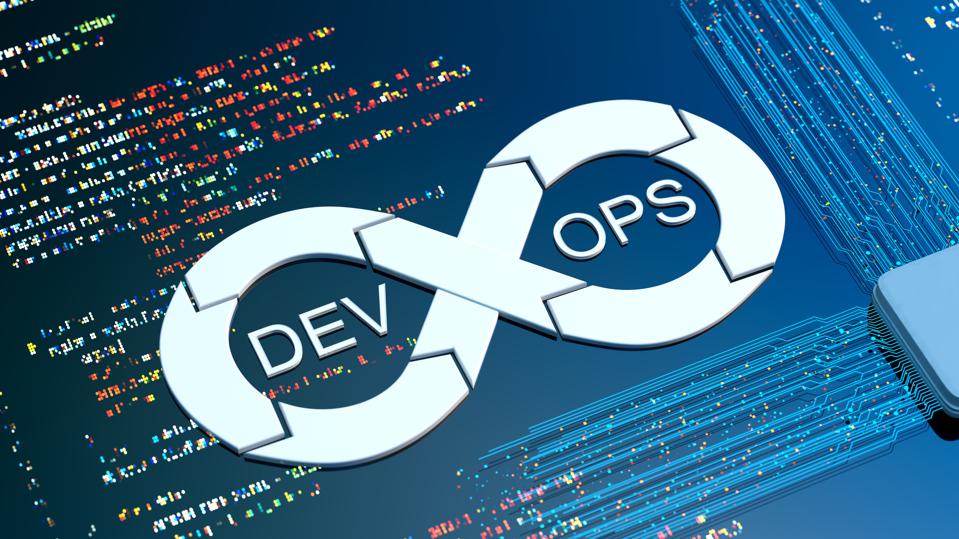
DevOps is a methodology meant to improve work throughout the software development lifecycle. You can visualize a DevOps process as an infinite loop, comprising these steps: plan, code, build, test, release, deploy, operate, monitor and — through feedback — plan, which resets the loop.
Ideally, DevOps means that an IT team writes software that perfectly meets user requirements, deploys without any wasted time and runs optimally on the first try. Organizations use a combination of culture and technology to pursue this goal.
To align software to expectations, developers and stakeholders communicate about the project, and developers work on small updates that go live independently of each other.
To avoid wait times, IT teams use CI/CD pipelines and other automation to move code from one step of development and deployment to another. Teams review changes immediately and can enforce policies to ensure releases meet standards.
It’s easy to write software quickly; writing software that works is another story. To deploy good code to production, DevOps adherents use containers or other methods to make the software behave the same way from development through testing and into production. They deploy changes individually so that problems are traceable. Teams rely on configuration management for consistent deployment and hosting environments. Problems they discover in live operations lead to code improvements, often through a blameless post-mortem investigation and continuous feedback channels.
Developers might support the live software, which puts the onus on them to address runtime considerations. IT operations administrators might be involved in the software design meetings, offering guidance on how to use resources efficiently and securely. Anyone can contribute to blameless post-mortems. The more these specialists collaborate and share skills, the more they can foster a DevOps culture.